
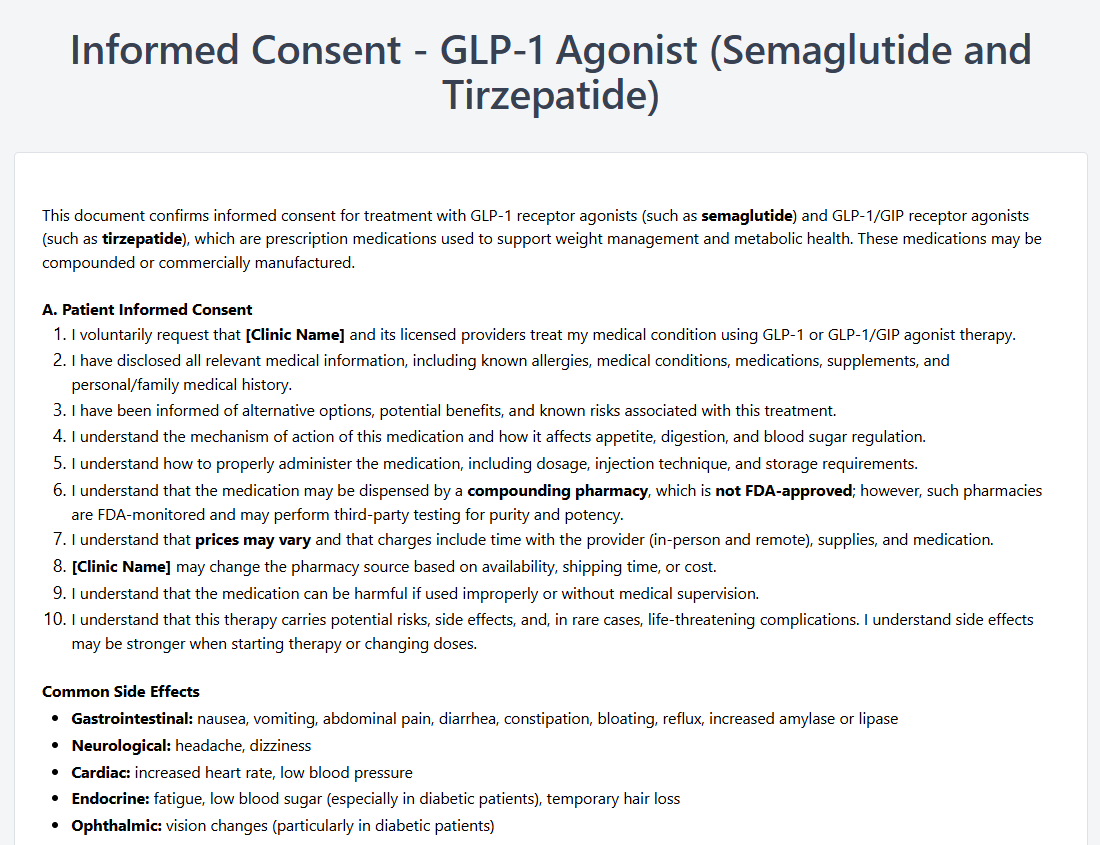

Informed consent is a foundational element of patient-centered care, particularly when initiating GLP-1 receptor agonist therapy with medications like Semaglutide and Tirzepatide. This process ensures that patients understand the purpose of the treatment, potential benefits, and possible risks, allowing them to make informed decisions about their care. Proper documentation of consent not only protects patients but also reduces legal liability for healthcare providers and fosters trust between clinicians and patients. By using a secure, HIPAA-compliant digital platform, clinics can efficiently manage the consent process while safeguarding sensitive medical information and improving overall workflow.
The GLP-1 agonist informed consent form is a structured document that provides patients with comprehensive information about the therapy, including its mechanism of action, expected benefits, potential risks, alternatives, and follow-up requirements. GLP-1 receptor agonists, such as Semaglutide and Tirzepatide, are clinically proven medications used to improve blood sugar control in patients with type 2 diabetes and support weight management under medical supervision. This form was developed in accordance with current clinical guidelines and serves as a standardized tool to ensure that patients fully understand the therapy before beginning treatment.
Key features of the form include clear explanations of the expected outcomes, potential side effects, contraindications, and any interactions with existing medications. It also outlines patient responsibilities, such as adherence to the prescribed regimen and monitoring for adverse effects. The form allows patients to ask questions and confirm their understanding, supporting shared decision-making and reducing the likelihood of misunderstandings. By providing a consistent framework, clinicians can maintain regulatory compliance while delivering personalized patient education.
Informed consent for GLP-1 agonist therapy is essential to both ethical medical practice and clinical effectiveness. Patients who are well-informed about their treatment tend to demonstrate higher adherence to therapy, more accurate self-monitoring, and earlier reporting of adverse effects. Documented consent also provides legal protection for providers by demonstrating that patients were properly educated about the therapy and agreed to it voluntarily.
Healthcare organizations benefit from structured consent forms by streamlining workflow, reducing repetitive explanations, and ensuring consistent communication across different providers. Common use cases include primary care settings prescribing GLP-1 therapy for diabetes or obesity, specialty endocrinology clinics, telemedicine consultations for remote patients, and clinical research studies evaluating GLP-1 efficacy. Digitally integrated forms enhance these processes by enabling remote completion, secure storage, and easy retrieval for audits or follow-up appointments. Overall, informed consent forms support improved patient engagement, clinical outcomes, and operational efficiency.
Traditional paper-based GLP-1 consent forms can be inefficient, prone to errors, and difficult to track. They may require patients to physically visit a clinic multiple times to complete paperwork, and manually filing and storing forms increases administrative workload. Paper forms are also vulnerable to loss or damage, which can compromise patient safety and regulatory compliance.
Digital consent forms address these challenges by providing automation, secure storage, and accessibility from any device. Conditional logic can display only the relevant sections for each patient, reducing confusion and improving efficiency. Integration with electronic health records allows for real-time updates, comprehensive documentation, and seamless continuity of care. Patients can complete forms at home or in-clinic, giving them flexibility while maintaining a fully auditable and legally compliant record. Overall, digital consent forms improve accuracy, efficiency, and patient satisfaction compared to traditional paper-based methods.
Q1: Who can use this form?
Any licensed healthcare provider prescribing GLP-1 receptor agonists, including Semaglutide and Tirzepatide, can use this form. It is suitable for adult patients undergoing evaluation for diabetes management or weight loss therapy and can be used in both in-person and telemedicine settings.
Q2: How long does it take to complete?
Completion typically takes 10–15 minutes, depending on the patient’s familiarity with the therapy and engagement with the form. Digital pre-filled data, guidance prompts, and clear explanations help streamline the process and ensure accurate understanding.
Q3: Is this form based on clinical guidelines?
Yes, it adheres to current professional and regulatory standards for GLP-1 therapy. The form covers risks, benefits, alternatives, and patient responsibilities, supporting ethical practice and informed medical decision-making. Providers can confidently rely on it for documentation and compliance.
Q4: Can the results be exported or integrated into EHRs?
Yes, completed forms can be securely exported in formats such as PDF or XML. Integration with EHR systems ensures easy access for clinicians, supports ongoing care, and maintains a complete audit trail for regulatory compliance.
Q5: Is patient data secure?
Absolutely. The platform uses HIPAA-compliant encryption for both data at rest and in transit. Access is strictly controlled, audit trails track interactions, and digital signatures are legally valid, ensuring confidentiality and regulatory compliance.

The leading patient intake platform. HIPAA compliant forms for healthcare providers and organizations. Find out what you're missing!


