
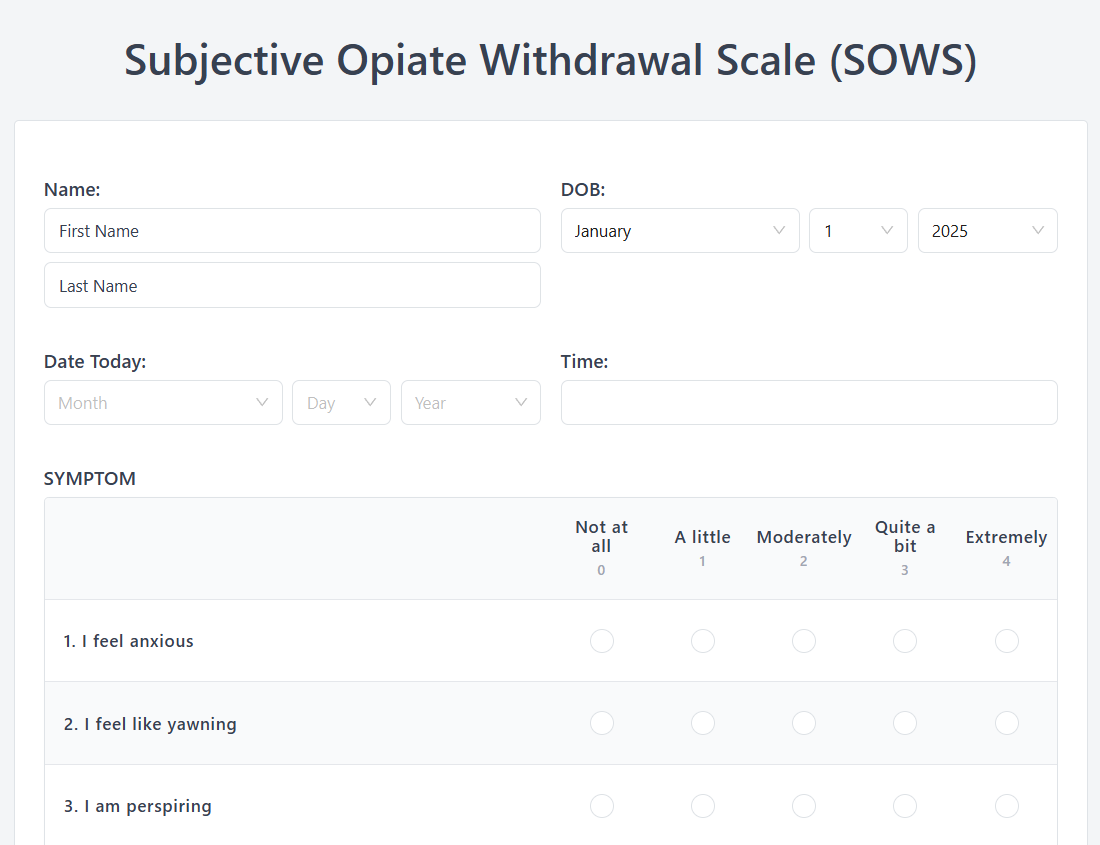

The Subjective Opiate Withdrawal Scale (SOWS) is a validated patient-reported tool designed to monitor opioid withdrawal symptoms in clinical and research settings. Zentake offers a secure, HIPAA-compliant digital platform that streamlines administration, scoring, and tracking of SOWS results. Providers can efficiently capture accurate symptom reports, enhance clinical decision-making, and maintain complete patient privacy with automated workflows.
The SOWS is a self-report instrument that measures the severity of opiate withdrawal symptoms from the patient’s perspective. Developed to provide real-time insights into withdrawal experiences, it helps clinicians tailor detoxification and treatment interventions. The scale typically consists of 16–32 items, each rated on a Likert scale, covering physical, emotional, and cognitive withdrawal symptoms. Scores quantify the intensity of withdrawal, guiding medication adjustments, monitoring progress, and evaluating treatment efficacy. SOWS is widely used in clinical practice and research studies for opioid-dependent patients. Its structured and standardized design ensures reliable symptom tracking and facilitates comparison across time points and populations.
Monitoring opioid withdrawal is critical for patient safety, comfort, and effective treatment planning. Accurate assessment of withdrawal symptoms helps clinicians adjust pharmacological and behavioral interventions. SOWS provides objective data to identify severe withdrawal events that may require urgent intervention. Early detection of symptom escalation reduces the risk of relapse or complications. Regular use of SOWS improves patient engagement by incorporating their self-reported experiences into care decisions. Healthcare organizations benefit from standardized reporting and documentation for audits and compliance. Researchers utilize SOWS data to evaluate new detoxification protocols and treatment outcomes. The tool enhances communication between multidisciplinary teams, supporting coordinated care. Patients receive individualized care plans based on real-time symptom severity. Integrating SOWS into digital workflows enhances efficiency, reduces errors, and provides actionable insights for both clinical practice and research purposes.
Common use cases include outpatient or inpatient detox programs, opioid replacement therapy monitoring, clinical trials evaluating withdrawal management strategies, and longitudinal studies on opioid dependence. SOWS supports rapid assessment during intake, ongoing monitoring during treatment, and post-detox follow-up. Automated scoring and digital tracking streamline workflow, reduce manual errors, and maintain complete data integrity. Clinicians can identify trends over time, detect complications early, and optimize therapeutic interventions. Digital administration increases patient compliance, allowing remote or in-clinic completion. Evidence-based results enable data-driven decisions and personalized treatment adjustments. Incorporating SOWS into research protocols enhances study rigor and reproducibility. Healthcare teams can quickly evaluate the impact of interventions and modify strategies as needed. Overall, SOWS provides a standardized, patient-centered approach to managing opioid withdrawal symptoms effectively.
Traditional paper-based SOWS forms are prone to incomplete responses, manual scoring errors, and delays in clinical review. Clinicians must spend additional time calculating scores and tracking changes over multiple visits. Digital SOWS administration ensures complete and accurate data collection. Automated scoring delivers immediate, reliable results for timely clinical decisions. Patients can complete assessments in-clinic on tablets or remotely via secure online portals. Digital storage maintains HIPAA compliance and protects sensitive patient information. Integration with EHR systems eliminates duplicate entry and improves documentation efficiency. Longitudinal tracking of withdrawal scores allows clinicians to monitor trends and treatment effectiveness. Digital workflows enhance accessibility, convenience, and patient engagement. Overall, transitioning to digital SOWS forms improves efficiency, accuracy, and quality of care.
Zentake streamlines the SOWS process through secure, automated, and patient-friendly digital solutions.
FAQs
Q1: Who can use the SOWS?
SOWS is intended for clinicians, addiction specialists, and researchers monitoring opioid withdrawal. It is suitable for adult patients undergoing detoxification or opioid tapering. The tool supports clinical decision-making and treatment planning. Researchers can utilize SOWS for studies evaluating withdrawal interventions. Zentake ensures secure, digital administration across settings.
Q2: How long does it take to complete the SOWS?
Completion typically requires 5–10 minutes. The structured Likert-scale format facilitates efficient reporting. Digital administration via Zentake may reduce completion time further. Immediate scoring allows prompt clinical review. Quick completion supports seamless workflow integration.
Q3: Is the SOWS scientifically validated?
Yes, SOWS is an evidence-based tool with demonstrated reliability and validity. It captures patient-reported withdrawal severity accurately. Research supports its use in clinical and research environments. Clinicians can confidently use it to guide treatment interventions. Validation ensures trustworthiness for monitoring opioid withdrawal over time.
Q4: Can results be exported from Zentake?
Yes, SOWS results can be securely exported in multiple formats. Data can be integrated with EHRs or shared with authorized providers. Exports maintain HIPAA compliance and confidentiality. Clinicians can use exported data for documentation, research, or treatment planning. The process is fast, secure, and reliable.

The leading patient intake platform. HIPAA compliant forms for healthcare providers and organizations. Find out what you're missing!


