
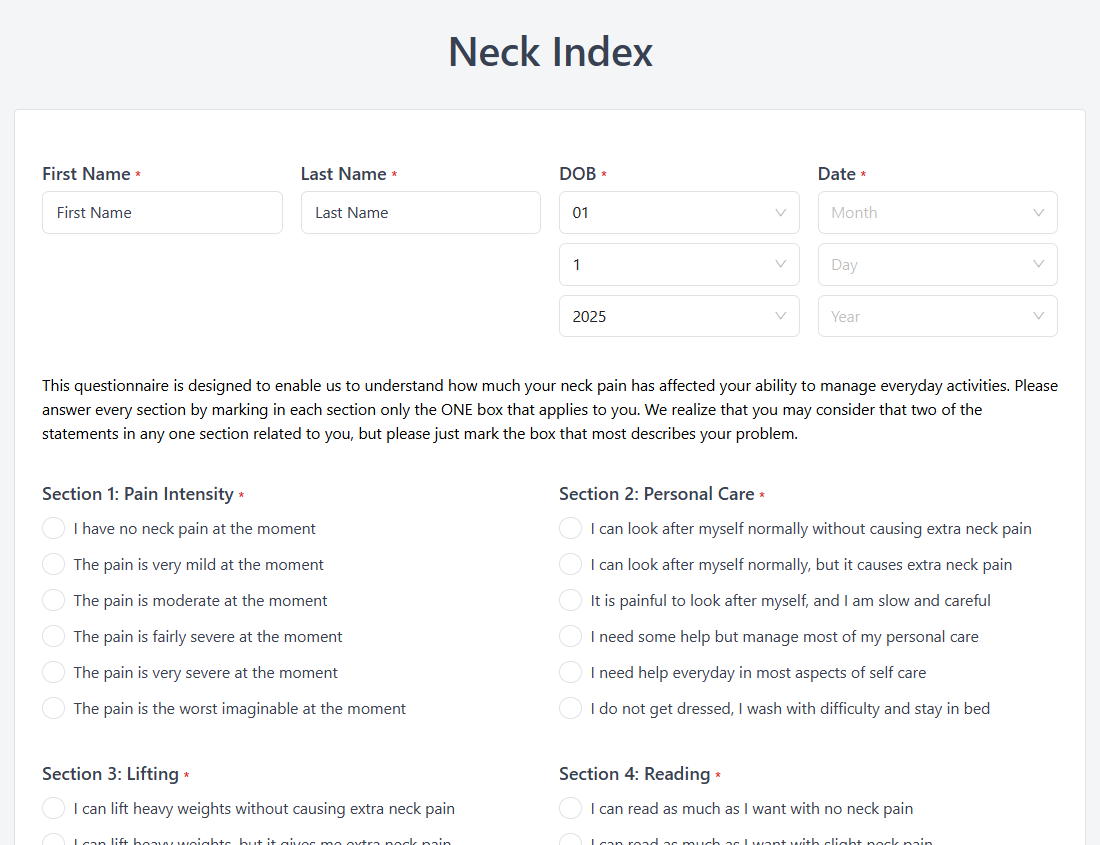

The Neck Index is a clinical tool designed to evaluate neck function, mobility, and posture, helping healthcare providers identify potential musculoskeletal issues that may affect daily activities or long-term health. This assessment offers a structured and reliable method to measure neck-related limitations, allowing clinicians to provide personalized treatment recommendations. With Zentake’s HIPAA-secure digital solution, completing, tracking, and analyzing assessments has never been easier or more efficient, reducing administrative work and improving patient engagement throughout the care process.
The Neck Index is a standardized assessment that measures cervical spine health, neck mobility, and functional limitations. It helps clinicians identify patterns of pain, restricted movement, and postural deviations, providing actionable data for treatment planning. Developed for use in medical, chiropractic, physical therapy, and rehabilitation settings, the tool allows healthcare providers to quantify both subjective and objective aspects of neck function, ensuring a comprehensive evaluation. Typically, the assessment includes a series of items evaluating pain intensity, range of motion, and posture alignment, which helps in creating baseline measurements and tracking improvements over time.
Key features of the Neck Index include its structured scoring system, the ability to detect subtle changes in cervical mobility, and its ease of integration into patient care protocols. The assessment can be administered in-clinic or remotely, offering flexibility and convenience for both patients and healthcare teams. By providing objective data, the Neck Index supports consistent monitoring, improves clinical decision-making, and enhances patient-provider communication regarding progress and outcomes.
The Neck Index plays a vital role in clinical decision-making for healthcare providers by offering a reliable measure of neck function and mobility. It helps practitioners detect issues such as restricted range of motion, postural imbalances, and chronic neck pain that may impact a patient’s overall quality of life. By quantifying these parameters, the Neck Index supports evidence-based treatment planning and allows providers to tailor interventions for optimal results.
For medical and chiropractic practices, the Neck Index can help determine the severity of musculoskeletal conditions, track rehabilitation progress, and evaluate the effectiveness of specific interventions over time. Physical therapists and occupational therapists often use it to monitor patient improvements, adjust therapy protocols, and ensure treatments align with functional goals. Mental health providers may also find value in understanding how musculoskeletal discomfort contributes to overall stress or affects patient engagement in therapy sessions, highlighting the interdisciplinary relevance of the tool.
The assessment is commonly used for initial screenings, routine follow-ups, research studies, and monitoring recovery from neck injuries. Its standardized scoring system enables providers to track patient outcomes reliably and consistently across visits. By providing accurate and measurable data, the Neck Index enhances clinical accuracy, improves patient education, and supports a patient-centered approach to musculoskeletal care.
Traditional paper-based Neck Index forms require manual administration, scoring, and data entry, which can be time-consuming and prone to human error. Paper forms are susceptible to misplacement, and sharing results with other members of the healthcare team often requires additional administrative steps. This manual process can delay clinical decisions and reduce overall workflow efficiency, particularly in busy practices.
In contrast, digital Neck Index forms through Zentake provide seamless automation, ensuring accurate and secure data capture every time. Patients can complete forms on in-clinic tablets, personal devices, or remotely, allowing flexibility and convenience without sacrificing data integrity. Automated scoring, instant reporting, and easy integration into electronic health records (EHRs) make digital forms significantly more efficient, allowing healthcare providers to focus on interpreting results and delivering care rather than managing paperwork.
Zentake’s platform enhances the use of the Neck Index by combining functionality, security, and patient-friendly design. Healthcare providers gain access to tools that streamline administration, scoring, and result management while maintaining strict HIPAA compliance.
Q1: Who can use the Neck Index?
The Neck Index is suitable for healthcare providers across medical, chiropractic, physical therapy, and rehabilitation practices. It can be administered to patients of various ages who require evaluation of neck function and posture. The tool is particularly valuable in practices that monitor musculoskeletal health, recovery from injuries, or postural-related disorders.
Q2: How long does it take to complete?
Completion time varies based on the patient’s condition and the specific items included in the assessment, but it typically takes 5–10 minutes. Zentake’s digital forms streamline the process, reducing patient wait times and staff workload. Quick completion allows providers to efficiently integrate the assessment into regular appointments without disrupting the workflow.
Q3: Is the Neck Index scientifically validated?
Yes, the Neck Index has been validated in clinical studies for reliability and effectiveness in measuring cervical spine function, neck pain, and range of motion. Using Zentake’s platform maintains the tool’s integrity while enhancing usability and data accuracy. Clinicians can confidently use results to guide evidence-based treatment planning and track patient outcomes.
Q4: Can I export results?
Absolutely. Zentake allows healthcare providers to export results in multiple formats, integrate them into EHRs, and generate reports for patient monitoring, research, or insurance documentation. Exported data can be used for trend analysis, clinical audits, or interdisciplinary case reviews, ensuring that patient care remains comprehensive and data-driven.

The leading patient intake platform. HIPAA compliant forms for healthcare providers and organizations. Find out what you're missing!


